Featured

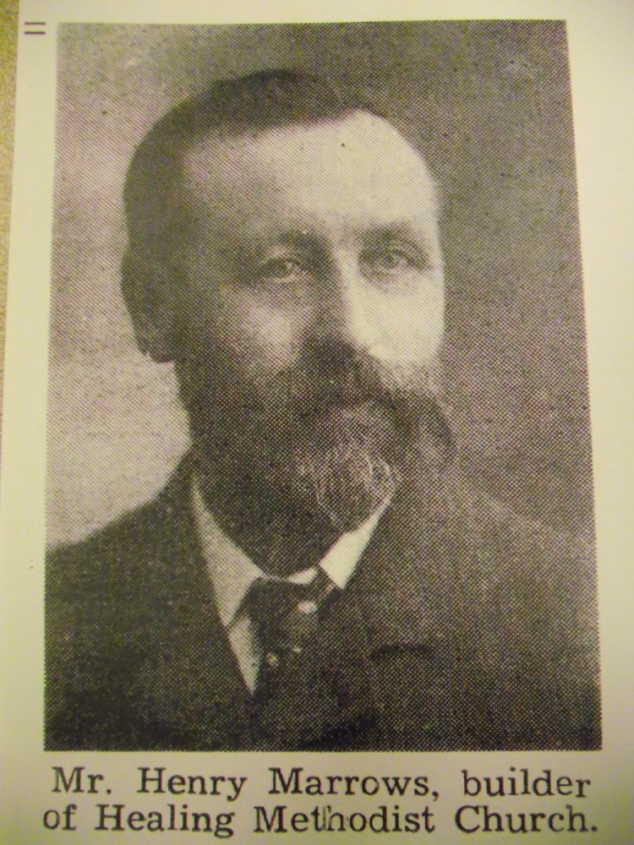
Henry Marrows

My interest in the man who built Cleethorpes Town Hall began when I moved to Healing and bought a house he had built. It set me searching for more about him.

Then several years ago five of his descendants came from across the country to pay a visit as part of the Lincolnshire Wolds Walking Festival where I was leading some walks about Henry around the village he was credited with developing.

Henry Marrows was born in Market Rasen in 1856 and moved to Grimsby where he set up his building firm in Garden Street. He built many of the area’s schools, including Strand Street School with the playground on the roof as well as Cleethorpes Town Hall.

His great grandchildren David and Ben Fawcett, both of Louth; Mary Smith from Maidstone in Kent; Will Jones from Barnet in London, and Helen Jackson from Cambridgeshire enjoyed the history walk in Healing where he lived and shared many stories.

One his great granddaughters, Mary Smith said: “There were five of us today, we are nine cousins in total, all the descendants of the children of Grace, Henry’s daughter.

“We know all our parents would have been delighted to know that Henry Marrows’ buildings were still valued and considered to be lovely buildings as they were very proud of him and so that’s quite moving.”

Henry moved to Healing where he had bought land in 1895 and began building houses on Station Road and The Avenue, where in 1899 he built himself Briarfield, but renamed Hazeldene in the 1950s.

Henry had three daughters, Grace, Lucy and Norah and every house he built in the village, the daughters lived in and as their families grew, further houses were built.

He was a master builder and a joiner. Doors, windows, staircases were all carved on site. Briarfield’s foundations were left to sit for two years and tomatoes were allowed to grow in them, while he built Arden Court next door for the owner of the town’s newspaper, Louis Porri.

The Marrows’ family owned Briarfield until 1952 when on the death of Henry’s second wife it was sold to the late Major Clixby Fitzwilliams, who moved to the village to develop the watercress industry.  It was during work on the house that Henry’s grandson, Joe Johnson saved an intricately carved wooden plaque bearing the initials HM for Henry Marrows.

Helen Jackson, another great granddaughter, had brought the carving back to Healing for the weekend from Cambridgeshire. She said: “When great grandpa built Briarfield it had lovely features on it.

“He was a master builder and carpenter and he did a plaque to fit on the wall with his initials engraved in it. Sadly the plaque was removed and it’s been passed down through the family. The window where it was fixed on the wall is no longer there.”

This attention to detail was also seen on the spindles of the staircase, which according to Mary had been recreated from a piece of embroidery that his wife Jane had been working on.

Great grandson David Fawcett, from Louth, came on the walk with his brother Ben. They lived in one of Henry’s houses on The Avenue close to the Radcliffe Road junction and he had fond memories of growing up in the village.

“We were a close knit community. The house had an enormous garden and the building itself was well constructed. It was wonderful place to live,” added David.

Mary’s brother, William Jones who had travelled from Barnet, echoed that by saying because they had so many relatives, they were always in and out of people’s homes.

As well as houses in Healing, which one estate agent in 1909 described as “a rising garden village with an abundance of spring water and healthy air”, Henry built the County Hotel, Immingham, homes in Barcroft Street and many electricity sub stations.

His houses in Healing include a majority of the red brick houses on The Avenue from the Oak Road junction to Radcliffe Road junction, and the ones on Station Road from number 80 towards the railway station.

They are all distinctive of the Edwardian period, red bricks with black and white timber cladding known as the Queen Anne style with large windows. Slate roofs and details on the gables and woodwork for the more elaborate villas.

Bricks were brought in on the new railway network from Killingholme and the woodwork was crafted on site. Attention to detail was paid in the bricks around busy areas, like doorways, are rounded so you don’t catch yourself on sharp corners.

The houses on Station Road include some cottage style houses in blocks of four, to semi-detached villas. Each has a front garden, a new thing for the Edwardians giving an extra layer of privacy from the road.

“He built so many beautiful buildings in the area, but in Healing the village we see is because of what he did and sadly none of the buildings are protected.”

Emma Lingard, Tour Guide

Henry was a prolific builder across the northern part of Lincolnshire. He had a keen interest in gardening outside of his business and was a member of Grimsby Rural District Council, as it was then.

Healing is his monument, and one we can enjoy. Without it being a conservation area one can only hope that his buildings are admired and looked after by those who choose to call them home.
Featured

Grimsby Streets

Grimsby steeped in Scandinavian history. Our language is filled with words that our Danish forebears would recognise.

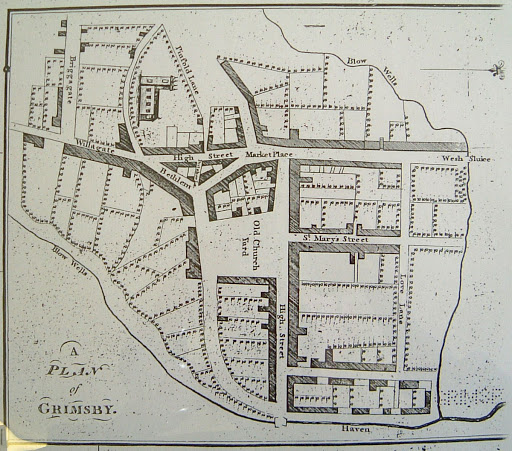
Take the suffix -gate on streets DeansGATE, WellowGATE, BrighowGATE, CarterGATE and the lost streets of FlotterGATE, and BaxterGATE. The suffix -Gate comes from the Scandinavian GATA and can also be traced to Anglo Saxon GEATA.

It means a cut through, a street. Aside from the church (Grimsby Minster), those names are ancient and still follow the original routes. You are treading in the footsteps of the ancestors.

Gate can be seen in many settlements under Danelaw – York, Hull and Lincoln all have streets with the gate suffix.

Buildings may have come and gone, but those streets remain the same, albeit with a few minor changes. You can learn much from those street patterns and the names.

Deansgate, on earlier maps is spelt Denesgate, the street of the Danes, or is it a play on words being close to the church and a Dean being a member of the clergy.

Three lost areas of the town are Ryngstake Thing, Kageler Thing and Mustlow Thing. A thing was an old Norse word for a meeting – particularly a place of government at a local level.

Next time you walk through town, imagine who has walked those streets before you. You can learn more about the town’s streets on my next guided walk on 14 April 2024.

You can learn more about streets in my book Grimsby Streets or on this website Great Grimsby :: Survey of English Place-Names (nottingham.ac.uk)

The L Files

Introducing a new podcast! The L Files presented by local historian and author, Emma Lingard, accompanied by history academic, Carla Linford.

New episodes out each fortnight. Starting Wednesday 4th June – listen to the trailer here

Emma and Carla join forces to discuss and debate a variety of topics on local history from across Lincolnshire – its people, architecture, myth and legend.

The L stands for local, Lincolnshire, whatever you feel resonates. For us it’s local history and all that it stands for.

In the first episode find out more about Carla and Emma’s love for history, and what their history journey has been and where it has taken them.

Find The L Files on Spotify.

Havelok the Dane

Ancient legend

In Charles Whistler’s book, Havelok the Dane, Grim was a merchant who had been trading with England. He frequently visited Saltfleet, which was a prosperous port, and Tetney. He lived on the west coast of Denmark where the king was Gunnar Kirkeban. Grim’s Jarl was a man called Sigurd, who was a counsellor to Gunnar.

Well loved by Jarl Sigurd was Grim, who had been his faithful follower, and was the best seaman in all the town. He was also the most skilful fisher on our coasts, being by birth a well-to-do-freemen enough, and having boats of his own.

Havelok The Dane, Charles Whistler

Grim had a wife called Leva, three sons (Raven, Withelm and Radbard) and two daughters called Gunnhild and Solva. One day, Hodulf arrives in Denmark with an army and slays King Gunnar in his hall and takes Havelok hostage.

Grim is given a heavy sack by Hodulf and told to tie an anchor to it and sink it at night, and then to come and claim his reward. He doesn’t, but instead opens the sack and sees a young boy inside, who turns out to be Havelok.

He is as I thought – he is Havelok, the son of Gunnar, our king. Hodulf gave him to me that I might drown him.

Grim, Havelok the Dane

Knowing at that point, all their lives are in danger, Grim gathers his family and along with a retinue of men, they flee and head to England and Lindsey where the merchant Grim has friends.

Grimsby

On heading northward up the Humber the book gives us a wonderful description of the first sighting of the settlement.

The tide fell, across the spits of sand that ran between the mudbanks, and we climbed the low sandhill range that hid the land from us…the level country between us and the hills was fat, green meadow and marsh, on which were many cattle and sheep feeding.

Here and there were groves of great trees…and on other patches of rising ground were the huts of herdsman, and across the wide meadows glittered and flashed streams and meres.

The beginning of Grimsby, Havelok the Dane

The east coast was a swathe of marshlands that stretched from East Yorkshire down to Skegness. Islands of sandhills reclaimed from the marshland appeared out of the water. The islands are what the Saxons call ig/eg pronounced ee – and found in such forms as ey, ea, ay, e. The Anglo-Saxons had settled in Britain in the fifth to seventh centuries.

The place he had arrived at had no name it seems. Grim settles and builds a home for his family here after being invited to by Witlaf the thane from Stallingborough.

“Now, we must call the place by a name, for it has none. Grim’s Stead maybe?”

“Call this place a town at once…Grimsby has a good sound to a homeless man.”

Havelok the Dane

He settled and became a prosperous fisherman, selling his wares at the market in Stallingborough.

Bluestones

The bluestones were set by Grim on four boundaries of his land. It was unlucky to move a boundary stone.

From historic books on the town we know one boundary stone was down Wellowgate. These blue stones were glacial erratics deposited after the melting of the glaciers.

Death of Grim

After a famine caused by a lack of rain, Grim dies in the book. He’d been unwell but on his death a thunderstorm arrives and the rain arrives.

His wife Leva died the night after. They were buried together under a mound on the highest sandhill and on top of it the family lit a fire.

We set his weapons with him, and laid him in the boat that was his best – and a Saxon gave that – and in it his oars and mast and sail, and so covered him therein. And so he waits for the end of all things that are now, and the beginning of those better ones that shall be.

Havelok the Dane

Burial

So where was Grim buried? A question I often get asked on my walk around Grimsby. Where was the highest sandhill?

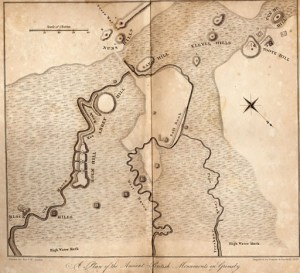
This map shows the sandhills – Abbey Hill was where Wellow Abbey would be built, Sand Hill is in the area of present day Cambridge Road. St Mary’s Church which stood in the centre of town was built by the Saxons and was in a prominent position, being a beacon for sailors coming up the Haven.

Holm Hill, where St Mary’s Catholic Church stands, was said to be prominent out of them all – so is this where Grim and his wife were laid to rest? To have accessed it they would have had to have gone through the marshes.

The people who lived in the settlement when Grim arrived were Welshmen – Celts or Ancient Britons who had converted to Christianity. The Saxons were still pagans and they went to the temple of Thors-way (Thoresway). Though in reality, St Mary’s was built by the Saxons.

In the book, after Grim’s death it continues with Havelok’s story and how he went to Lincoln and met Goldberga. He calls himself Havelok Grimsson (son of Grim) of Grimsby.

Grim Falfest

In August 2022 we welcomed the news that there was to be a celebration of our Viking heritage and Scandinavian connections.

It’s a great opportunity to learn more about our heritage, culture and language. Grim is returning. This new event ran from Friday 23 September to Sunday 26 September in Grimsby. It ran in 2023 but after lottery heritage funding ran out, has not been sustainable to carry on.

In order for it to continue it needs support and sponsorship from the business community and some elements of the event need to be paid tickets to ensure its survival, and along with the selling of merchandise it could help sustain the main event.

Star of stage and screen

Grimsby saw a star of the stage and screen shine bright in the 20th Century. She even starred in Hitchcock’s films.

Violet Farebrother
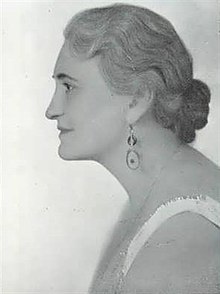
 Violet Sutcliffe Farebrother was born in the town on 22 August 1888. Her father Ernest was the town’s architect and surveyor, and Farebrother Street is named after him.

She had two brothers.   Ernest died in 1891, and Violet, then aged three, was brought up by her Uncle Tom Sutcliffe, who was MP for the town and involved in shipping. He was the brother of her mother Kate, who died in 1942.

The Sutcliffe family lived at Stallingborough Manor, a house which no longer stands. Sutcliffe Avenue in Grimsby is named after him.   Up until her father’s death she had grown up in Corby House on Wellowgate – designed and built by her father. The house still stands today on the corner of Wellowgate and Abbey Road.  

At the age of 18 she was living in London working as an actress. She made her stage debut at the Duke of York Theatre, London in 1907.  Violet was a successful actress in silent movies and then notably appeared in three of Alfred Hitchcock’s movies.  

Violet also appeared three times on stage at the Prince of Wales Theatre, Grimsby (the theatre her father designed). In 1951 she was Patron of Grimsby’s Caxton Players.   Between 1911 and 1945 she appeared in 25 films. She played in several West End roles before she retired in 1965. She died in Eastbourne in 1969, aged 81.

You can learn more about the Farebrother family on my Discovering Abbey Road guided tour.
This article was first published as part of the Grimbarians project.

Lived for the day

My motto has always been ‘today’ and perhaps it is a very good thing for me

Bert Wood

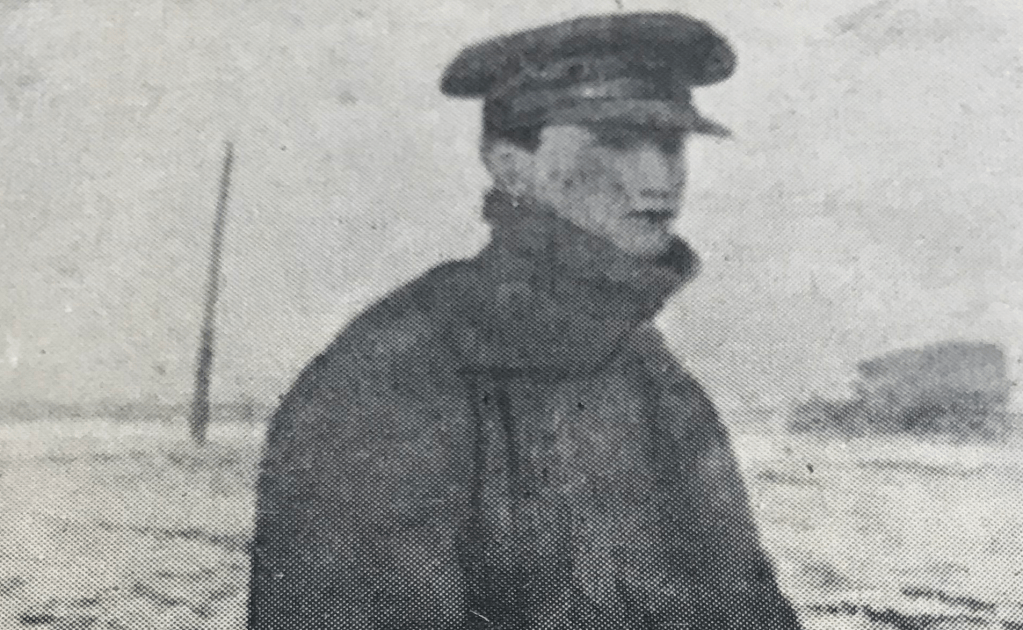
Grimsby’s World War One fighter ace Bert ‘Chips’ Wood lived for the day. He joined the Royal Flying Corps in 1916 and had 13 confirmed aerial victories. Unheard of when the average life expectancy of an RFC pilot was 11 days. He was tragically killed in a flying accident near London in 1917.  

His story begins in Grimsby in 1898. His father Walter was a magistrate, and the family lived at Ernecroft on Abbey Road. Bert’s brother Ted was also killed during the War, and the two were the focus of a book called ‘Two Soldier Brothers’ published in 1919.  

Bert was a pupil at St James’ School and was the first boy scout to be registered in the town. He went on to form a scout group called Hound’s Patrol with three of his friends. When Baden Powell, the founder of the scout movement, came to visit Grimsby in 1911 Bert was introduced to him as Leader of the 3rds – the Scout group set up at his school.  

Bert’s flying career saw him awarded the Military Cross and Bar for his gallantry and devotion. In 12 weeks, he accounted for 36 German planes, some outright ‘kills’. In a letter home he recalled tangling with Richtofen, the famous German Red Baron.   He was killed in a flying accident in November 1917 in England. He was flying his Sopwith Camel to practice dogfighting tactics with another pilot when he suddenly slumped forward in the cockpit and his plane nosedived into the ground killing him. He was recovering from a bout of the Spanish Flu and it’s believed he may have fainted.  

Throughout his flying career, he had carried a lucky mascot – the Lincoln Imp – on the day he was killed the mascot was still in his plane in France.   His body was returned to Grimsby on a gun carriage, and he was buried with full military honours in Scartho Road Cemetery.

In one of his last letters home, he summed up his philosophy on life: “My motto has always been ‘today’ and perhaps it is a very good thing for me. You know, Dad, when I was out in France, I got to look at things in such a light that it was impossible to make any future arrangements, and so I lived for the day, as I do now.  

“It stopped me from being a coward anyhow, and if a fellow can prove to himself that he is not a coward and is not afraid to meet the shadow we call Death nor the challenges faced in this great game of life, well, it makes up for thousands of failings”.  

You can learn more about Bert on my Discovering Abbey Road guided tour.
This article was first published as part of the Grimbarians project.

The ghosts of Healing Manor

You either believe or you don’t when it comes to the spirit world. Which camp you are in depends on your experiences.

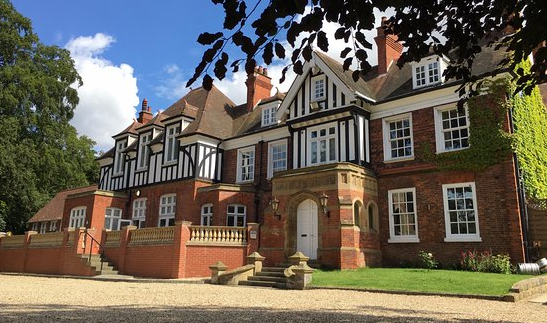
On Sunday 30 October 2016 I led the first ghost tour around Healing Manor. The former private house has a number of ghosts swanning around its rooms. Owners over the years have all felt, seen or heard their presence.

This Halloween I gave a talk at Vittles Grimsby on the subject of the town’s ghosts. I mentioned Healing Manor and some of the incidents that have happened, which I will share some of them here.

Many on first entering the house (now a hotel) from the main door have felt a heavy energy. Those who are sensitive to these things, talk about it being male and liking it. It’s heavy and it lingers. This is said to be the spirit of a man who lived in the house until his death in the 1980s.

He has also been seen staring out the middle bedroom window – the room he was confined to due to his physical ailments. It’s also in this room that kettles have switched on and off when not plugged in; items have been moved or thrown by an unseen force.

Another former owner has been walking down the main stair case and heading outside through what was the garden room (now the Portman Restaurant). The lingering smell of pipe smoke is said to be him too.

A visit to the house by a medium picked up on some of the secrets: an affair and a strained marriage with a lot of anger and hatred.

The barn, which was once a barn adjoined by the blacksmith’s forge and the gardener’s quarters has also been the scene of noises. Doors banging, footsteps heard and doors being locked when the keyholder had not locked them. Who is this ghost?

What have you experienced? Are you a believer? If you have any stories of ghostly goings-on in Grimsby’s buildings please let me know.

Festival of the Sea – Grimsby

We haven’t had many special festivals in Grimsby – none that I can recall, unless you include some of the events that have been held in People’s Park or the Fish Docks Open Day.

This weekend (Saturday 17 July) we can all look forward to celebrating the town and its connection with the sea. The Festival of the Sea is new and is intended to look at our long relationship with the water, through trade, invaders, fishing, heritage, song and legend. It’s also a future look, let’s not forget how in this age we have a strong connection still.

I am leading two walks on Saturday, both of which are fully booked. It’s a new walk that I produced last year during lockdown, in anticipation of being allowed out. Knowing, too, how much people have an affinity for the past, especially fishing.

Without giving too much away – I at least do want you to sign up for a future walk! – the tour focuses on the original Haven and the docks built as part of the early development of the town in the 1850s.

Grimsby was not just fishing – commercial fishing on the scale which gave the town its ‘Premier fishing port in the world’ title, did not start until after the First World War. The town was trading with Scandinavia in furs, oils and timber.

Fishing was not really thought of. They did fish, and fishermen could obtain a license for a strip of the water along the river. The real fisherfolk were in Cleethorpes, launching their boats from the beach.

The town was about trade and commerce with overseas nations. Trade with Norway stretched back to the Danish invaders. People came and settled in the town adding to our rich heritage and language. Much as it does today.

So as oil, grain and wool gave way to timber, which in turn gave way to fishing; and then to food processing and to renewables – the town has its industrial cycles. Food processing is still the largest employer in the area, so fish is still important to the town.

No one wants to go to sea these days – these folk who talk about ‘fishing is coming home’ – I don’t see them clamouring to get their Skippers tickets or fork out thousands for a new or second hand vessel. There’s fish out there – haddock, whiting, dog fish, bass – just off our coast a rich supply of seafood.

If you fancy laying a few pots you could catch crabs, if you’re lucky maybe a lobster. It’s a tough job and sometimes does not reap the financial rewards required to survive. You’re probably best going on a pleasure fishing boat.

What’s in a name?

Or how some people get wound up simply because they don’t believe it’s true!

The Kasbah

Since it was announced an area on Grimsby Docks was being reenergised and it was going by the name The Kasbah, people have been going apoplectic on social media channels.

They have accused others, who have heard it being called by that name, as liars and being told what do they know about the docks.

It was called that

I, for one, have heard it being called that. In 1990 as a spritely 20 year old I got a job at the National Fishing Heritage Centre (as it was then called) as a crew member. I loved the history and lapped up the stories the old dockers would tell us.

Men who had been fishermen, lumpers, or worked in other associated trades down the dock were there teaching us about its history. We learnt new expressions, like ‘egging back o’ doigs’, and we found out what life was like, harsh and brutal and not all romance.

When it came to planning a coach tour in 1991 to show visitors the docks and to guide them around and tell the stories about the buildings and the people, we turned to these men for our information.

It came to light that the area behind the Cosalt building, which was a hive of narrow streets, alleys, home to so many different businesses, had been called The Kasbah.

I had no reason to doubt these men who told me that. I didn’t accuse them of being liars or talking sh*t, I lapped up their stories.

Exotic location

The Kasbah, so named because it reminded someone of the kasbah in Morocco. The Kasbah in Marrakech is actually a walled citadel, but its narrow streets and busy markets obviously gave rise to the name n Grimsby. Either because it reminded a person of that area or it was a joke – a play on the name as Grimsby was the complete opposite.

No one knows for certain when the name began to be used, but it doesn’t have to have been written down for it not to be true. Neither does it have had to be used by lots of people. It doesn’t mean it is not true.

The people who told me the name were probably in their 50s-60s when they spoke to me in 1991, which means they were working down dock in the late 1950s/60s. They may well have picked up that name from older folk.

Support the town

Some people are narrow minded, and will not be open to the fact there may be alterative names or views.

The National Fishing Heritage Centre is now called the Fishing Heritage Centre – I don’t get angry or upset. Fields and streets once had different names or nicknames, but just because we no longer use them does not mean it didn’t exist.

Instead we should be uniting as a community, and embracing these historic stories and supporting our town as we move forward into a new age. It’s all a learning curve and one which should enrich our knowledge about the area and the people who came before.

Let me say this, using the name The Kasbah has not been the invention of the local authority or the heritage sector. It is a name whose origins and first use have been lost in time.

Dorothy Sheffield

A member of the Sheffield family, Dorothy was the daughter of a baronet.

Lady in a Victorian gown

Her ancestor had built Buckingham House, later to become Buckingham Palace.

She was to marry into one of the wealthiest families in England, never imaging that one day she would become a Viscountess.

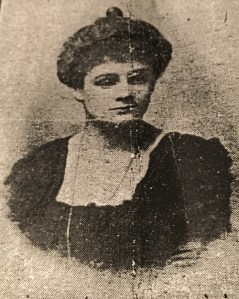
Dorothy Marie Isolde was born on 23 April 1878. Her mother was Priscilla Dumaresq and her father was Sir Robert Sheffield, 5th Baronet.

The family lived at Normanby Hall near Scunthorpe.

Lady Portman was described by all who knew her as a proper lady. She was pleasant and kind to all.

Life as a debutante

We do not know when Dorothy met her future husband, but likely it was they mixed in the same social circles.

Gerald was a Captain in the 10th Hussars, a cavalry regiment. Serving in this same regiment was one the Hon. Dudley Pelham, brother to the 4th Earl of Yarborough of Brocklesby Park.

Portman and Pelham were friends; the upper gentry connection and a fondness for hunting, may have brought Portman this way on visits. Portman is mentioned in Captain George Collins’ book on the Brocklesby Hounds of 1901 and the way it reads suggests he was well acquainted with riding out with the field prior to 1901.

Pelham was certainly on good terms with Richardson, the owner of Healing Manor, as he had married his mother, the Dowager Countess of Yarborough on his father’s death. He probably introduced Portman to him, which is how in 1902 he came to own Healing Manor.

Marriage

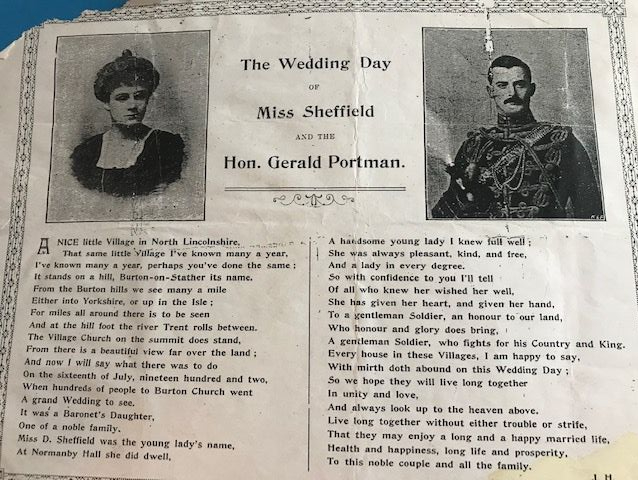
Poem about the wedding day of Dorothy Sheffield

She married Gerald Berkeley Portman on 16 July 1902. They were married at the church in Burton upon Stather. The estate workers gathered to see and a flower arch was put up.

One of the workers wrote a beautiful poem (see image above) about her and her husband.

It was a Baronet’s daughter,

One of a noble family.

Miss D. Sheffield was the young lady’s name,

At Normanby Hall she did dwell.

A handsome young lady I knew full well.

She was always pleasant, kind and free,

And a lady in every degree.

J.H

Children

Gerald and Dorothy had three children, Gerald, Michael and their youngest, Penelope, who would inherit Healing Manor on her mother’s death in 1964 and remain there until her death in 1987.

Gerald would become the 8th Viscount on his father’s death in 1948. Look out for a future post on the 7th Viscount.

Love of horses

Lady Portman was very fond of horses and owned racehorses, as well as both being great supporters of the Brocklesby Hunt.

She was another fine horsewoman who frequently rode out with the Brocklesby Hunt alongside her husband.

She also presented a silver cup to Market Rasen Racecourse. Pre war the couple had success with their horse Marriage Settlement.

Title

Her husband came into the family title in 1946 following the death of his brother.

So it was on 2 November 1946 Dorothy became known as Viscountess Portman of Bryanston.

Life at Healing

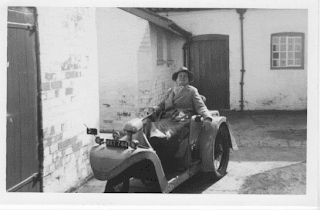
By all accounts, Viscountess Portman was a lovely lady – friendly and pleasant, with a dry sense of humour. In later life she had to use a motorised wheelchair to get about as she had her leg amputated, and was often seen in Healing and would stop to talk to people and admire their children.

Estate workers, said she would often be seen in the fields around the estate stubbing out thistles with her stick, and to have seen her, in an old felt hat and coat, you would not have taken her for a Viscountess.

She did, however, expect to be called “m’lady” and wow betide anyone who did not address her accordingly. She would always greet you with a ‘good morning’ or ‘afternoon’ for hello was reserved for the telephone.

Her companion for many years was the Hon Mildred Foley. Miss Foley never married and came from a prominent family in military circles.

Lady Portman had a wonderful sense of humour. Her farm manager Mr Robinson always wanted a combine harvester, and one day she presented him with a toy one on his birthday.

On his retirement she presented him with a clock and on his wedding day she lent him the chauffeur and a car.

Family

Dorothy was known as Aunt Dolly by her many nieces and nephews. She was fondly thought of.

She owned a parrot, which flew around Healing Manor and talked. When she visited her family at Normanby Hall the parrot would go with her and terrorise the staff as it flew around. The ghostly presence of the parrot has often been felt by residents at Healing Manor – more about that in my ghosts of the Manor blog.

Theft

In 1932, it was reported in a newspaper article that Nelson Carter, chauffeur to Lady Portman, stole a box containing £9000 worth of jewels from the car while on the road between Watford and Hemel Hempstead.


Death

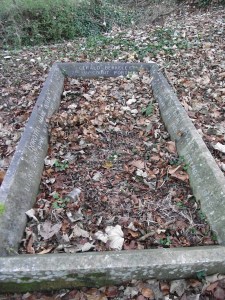
She died on 21 May 1964 and is buried with her husband in the graveyard in Healing.

grave covered in leaves
The grave of Dorothy and her husband Gerald at St Peter and St Paul Church, Healing.
Lady Portman in her invalid carriage