Who was Grim?

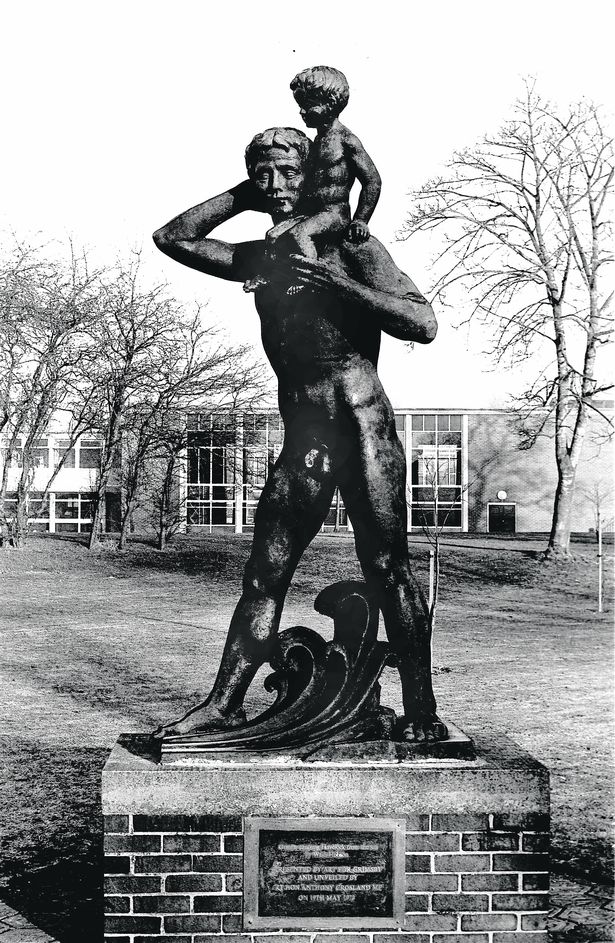
statue of boy sitting on man's shoulders

Grim – the founding father of Grimsby and saviour of Havelok.

What truth is there in the legendary tale of how a Danish fisherman saved the Prince of Denmark and founded an English settlement?

Many will remember the statue (above) sited at Nun’s Corner outside the Grimsby Institute. It was commissioned in 1973. Built of fibre glass and showing Grim as an athletic man carrying the young Prince on his shoulders out of the water, it was subject to vandalism. Certain parts of Grim’s anatomy would fall off.

Another image of Grim is on the town’s seal, which dates to the 14th century. This shows Grim as a brave warrior carrying a shield and sword. At his feet are Prince Havelok and Princess Goldborough. The original seal can be found in the archives, while a blown up copy of it is on the side of Grimsby Library by the main entrance and obscured by the ramp.

Grimsby, on the east coast, has its roots in Scandinavian mythology. Ask any Grimbarian and they can recall the tale of the Danish fisherman Grim, who rescued Prince Havelok from the stormy sea and brought him to England, whereon the Prince fell in love and married Goldborough. While Grim founded a town and lived in an upturned boat.

Whether the tale is fact or fiction, the town seems to have its roots in the Viking ages. The fisherman’s name, Grim linked with the Scandinavian suffix -by, which means the village or farmstead of Grim. Grim(r) being a Scandinavian first name, which is well documented.

What truth is there in the legend? What year did the legendary Grim arrive? What can we learn from the word ‘grim’?

Meaning of the word grim

Let’s begin with understanding the meaning of the word grim. For us in the modern age, it’s an adjective meaning:

  1. very serious or gloomy:
  2. (especially of a place) unattractive or forbidding:

Grimr is/was a popular Scandinavian first name. It was used by the followers of the Norse God Odin. Odin being the father God married to the goddess Frigg – connected with fertility.

There are many places in England bearing the name Grim. It could be that these settlements were named after the followers of Odin – Grim was one of the many names the shapeshifter God was called, – or maybe named after the Chieftain who bore the name Grim.

In old Welsh Grym means strength. Could this settlement have been called by this Celtic name and adopted by the Danes?

In Old Norse Grim meant an unattractive, forbidding place in the marshes. Quite appropriate when you cnsider The Haven running off the Humber cuts through a msrahland landscape. It’s how the East and West Marsh came to be named.

This east coast landscape was low lying with springs, creeks running across it. An area of wetland inhospitable that flooded with the tides. You can imagine the Danes sailing down The Haven, standing looking out at the wet landscape populated with islands and saying “It’s a bit grim”. In most cases places are named after the topography or geography, and so calling the settlement Grimsby – the forbidding settlement in the marshes makes total sense.

Who were the Danes?

The period referred to as the Viking Age dates from around AD 800 to 1050. The homelands of the Vikings were in Scandinavia, but the countries of Scandinavia as we know them today did not exist until the end of the Viking Age. 

Throughout Viking-age Scandinavia the main occupation was the production of food. Farming, fishing, trapping and collecting were the main activities in the annual cycle.

There is no evidence to suggest that they had to leave to find new land on which to settle their growing population, as studies have shown that there was sufficient land available in Scandinavia.

It is more likely that local chieftains or aristocrats who felt themselves under threat by powerful neighbours, or by rulers who wanted to strengthen their grip by uniting their territory into one kingdom, opted to look for new lands across the sea.

The Vikings hold us with a fascination – the Norsemen who conquered France became the Normans who conquered England. The Vikings who conquered England were conquered by the Normans. These people settled, take local wives and give their children Viking names.

Vikings are made up of those from Denmark, Sweden and Norway – in later years the Icelandics. Viking means raider. It is not a race.

It began with ‘hit and run’ raids in to England, but then in 865 Viking armies combined and landed in East Anglia to conquer the Anglo Saxon lands.

The –ing place-names, which are characteristic of the Saxon state are not conspicuous in Lincolnshire, but the –bys and the –thorpes abound. 

Grimsby – by the settlement or farm of Grimr; or as we learn it becomes known as mekill Grimesby derived from Old Norse (mikill  means ‘great’) Great Grimsby.

Those Danes that settled here came with Halfdan Ragnarson’s Great Heathen Army from (865-873) mid-9th century. The first raid in Lincolnshire is recorded in 841AD. In 871AD the Vikings campaign was reinforced when the Great Summer Army arrived.

The town seal

The fact Grim or Grimr is seen as the founder of the town can be seen on the borough seal and in these lines from The Lay of Havelok the Dane (lines 743-48):

And for þat Grim þat place auhte,

Þe stede of Grim þe name lauhte;

So þat Grimesbi it calle

He þat þer-of speken alle;

Bituene pis and Domesday

Grim stories were known about by the early settlers from the 12th Century – they knew their ancestors had come from across the sea. Some believed he was buried in the town, but where did this arise?

The seal shows there is some truth, there’s always a grain of truth in a legend – maybe he was a great man from Denmark who bore the name Grim and the stories were woven around him.

The borough seal dates to the 13th Century. It shows a resplendent Grim bearing a sword and shield with an ornate boss and rim taking centre stage. He is seen more like a warrior than a fisherman or merchant. Some have likened the pose to that of Orion. He has short hair, clean shaven, but has a moustache. By his feet is a conical object, probably a helmet. Above him is a hand, the hand of providence by which Havelok was preserved.  Near the hand is a star which marks the start and end of the inscription.

Around the edge are the latin words “Sigillum Commune Burgensium Grimebye” – The Common Seal of the Burgesses of Grimsby.

Academics say the seal is as old as the time of Edward I (1239 -1307), which makes it contemporaneous with the manuscripts of Lay of Havelok.  Note the seal is written in a character which fell out of use after 1300.

Grimsby became a parliamentary seat in 1295 returning two MPs until 1832.

The seal appears to have gained life following the Lay of Havelok, so let’s turn to look at this manuscript.

The Lay of Havelok

This poem is known in two earlier Anglo-Norman versions, one by Geffrei Gaimar and another known as the Lai d’havelok.

The story of Havelok is first told in lines 37–818 of Geoffrey Gaimar’s Anglo-Norman Estoire des Engleis of about 1135–40, which was the basis for another Anglo-Norman poem, the Lai d’havelok, which in turn may have influenced Havelok the Dane by Charles Whistler, which became a best seller in the 1900s. 

Havelok is the second oldest surviving romance written in English, after King Horn; it is believed to have been composed somewhere between 1285–1310. Academics analysing the manuscript believe it may well have been written in Lincolnshire about 1301 or just prior after examining the different dates in the text. If it dates to the 13th century, it equates with the date of the town’s seal, which is said be to based on the poem.

The poem is saturated with Norse words. It is worth a read, the English version was thought lost, until it was discovered in the 19th century.

In this version Havelock has a royal birthmark, a cross shape on his shoulder and his father is King Birkabein.  The King dies and Godard holds the crown, but he murders Birkabein’s daughters and gives Havelok to Grim to murder. Grim spares his life and they flee to England.

Havelok the Dane

There is a novel ‘Havelok The Dane: The Legend of Grim‘ which tells the story of how Havelok was saved by Grim. Havelok, Prince of Denmark and heir to the throne – his father the king slain by Hodulf, a Norseman, who assumes the title.

Written by Charles Whistler in 1899 and first published in 1900, it became popular. It was reprinted in 2000 by the Grim and Havelok Association.

It is based on the Norman French poem, The History of the English by Geffrei Gaimar and The Lai d’Havelok (Lay of Havelok).

In Whistler’s book, Grim is asked to kill Havelok, but instead flees Demark with him and finds a new settlement in England. Havelok goes on to marry the English Princess Goldborough who helps him gain his Danish kingdom back. To read more on this visit the Whistler blog post.

Conclusion

In my opinion the Danes who landed here, in what was to be called Grymesby, named it after the marshland landscape – a forbidding place in the marshes.

It became known as mekill Grymesby – Great Grimsby.

In the late 1200s an unknown author wrote a poem Havelok the Dane, written in the Lincolnshire dialect and smattered with Old Norse words. This may have been a descendant from the first settlers. In it Grim is depicted as a hero and the town suddenly has a back story, rather than reality being a settlement in the wet, forlorn marsh landscape.

This PR spin then saw the creation of the town seal to celebrate this legendary man. Then in 1900 Whistler took these stories and poems and created his own, at a time when the town was on the cusp of greatness and riches from fishing. Putting it in the spotlight once again.

Cut to 2022 and born out of my idea to celebrate the town’s founder we have Grim Falfest and the townsfolk are once again talking about the man who started it all.

I’ll let you form your own opinion, but in every legend there’s a grain of truth.
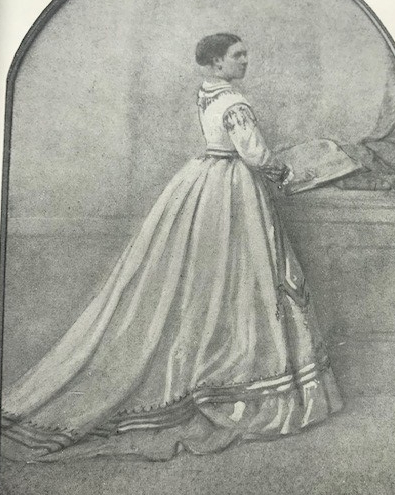
Countess of Yarborough

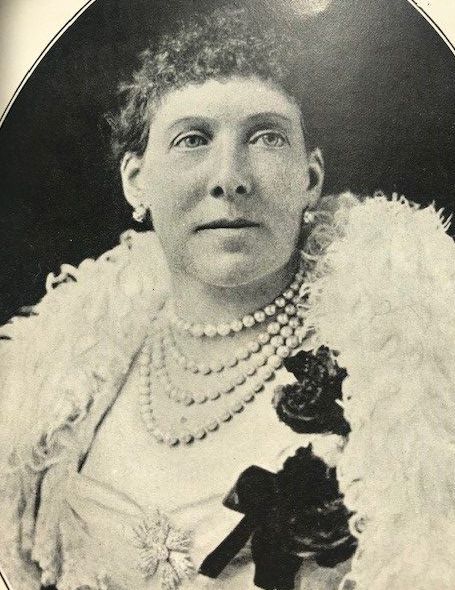
lady in pearls

Today (23 April) would have been the birthday of Victoria Alexandrina, Countess of Yarborough.

She was the daughter of William Hare, 2nd Earl of Listowel – Grimsby’s Hare Street is named after the family – and she was born in 1838.

Her connection to Grimsby was through her marriage to Charles Pelham – who was to become the 3rd Earl of Yarborough.

Marriage

She married Charles Anderson-Pelham, 3rd Earl of Yarborough on 3 August 1858. They had five children, Charles Alfred Worsley Pelham (the 4th Earl), Victor Ralph, Henry, Dudley, and Gertrude Augusta Pelham.

Dudley Street, Augusta Street, Charles Avenue, Victor Street, Pelham Road, Pelham Avenue, Conyers Avenue, Hare Street were named after family members, as development was on land they owned.

The 3rd Earl died aged 40 in 1875 and as his 15 year old heir was too young to take on the title, the Countess managed affairs until he came of age.

In that time she managed the hounds assisted by John Maunsell Richardson, who also became Master of the Brocklesby Hounds – he had been a good friend to the Earl (more on Richardson in another blog). A love match developed and in 1881 the couple were married and they lived at Brocklesby Park until 1886 when the 4th Earl married.

Love, they say, makes a pleasure of all toil for the beloved, and my brother Maunsell’s reward came when in 1881, the present Lord Yarborough came of age, and Lady Yarborough felt free to marry the man of her choice.

For seven years he’d waited patiently, and I am very sure that had his divinity elected to marry some one else, he would have remained a bachelor to the end of his days.

The Life of a Great Sportsman, Mary Richardson

Life in Healing

On marrying John Maunsell Richardson in 1881 and when her son came of age to the title, the couple moved to Healing Manor in 1887.

Richardson had the house renovated and modernised and extended befit for his wife. They built new estate cottages on Stallingborough Road and constructed a stable block. Both the cottages and the stables bear his coat of arms.

In 1890 they purchased 171 acres of land in the area and by 1892 had purchased the rest of the estate from the mortgagers. They continued their support of the hunt and were involved with their duties to Grimsby.

In 1902 the couple sold the house to the Portman family for £18,000 and they moved to Oakham, Rutland. In the book by Richardson’s sister, she mentions this sudden move, but that it was done for personal reasons.

The couple had one child together, John.

Famed horsewoman

Victoria was a fine, competent horsewoman, who hunted regularly with the Brocklesby.

She came to Brocklesby Hall in 1859 as an 18 year old newly wed. According to Mary Richardson, her future sister in law, no Pelham ladies rode to hounds, in fact hardly any ladies hunted.

She rode to hounds side saddle and was a sight to behold. As Lady Worsley she rode out and acquired many admirers.

Large, clear and blue, as only Irish eyes can be, her manner had the peculiar fascination that only a thoroughly kindly heart and buoyant temperament can give.

Then again, who would fail to admire the perfect little figure, showing to such advantage on horseback?

The Life of a Great Sportsman, Mary Richardson

She attended every meet she possibly could and turned proceedings into a pleasurable event. She had courage and judgment in the field with a charming manner.

A year before they married, Maunsell gave Victoria a beautiful bay gelding called Birthday, who was a very fine jumper and ‘an all-round perfect lady’s horse.’

Richardson’s death

Sadly her second husband Maunsell died in January 1912. He is buried in Edmondthorpe, Rutland but a memorial stone and the lynch gate were dedicated to him at Great Limber and can still be seen today.

Lady Yarborough had been the one love of his life, and their relationship had a depth and happy constancy to it that was felt by friends and family. They had shared interests and were never far apart.

She received many kindly letters following his death.

I do feel for you so. You loved each other so, and 30 years of such love is so rare – I cannot bear to think of your life without him.

Mourner

Service

Her connection and duty to this area was strong and she carried out many public duties. One of them was the laying of the foundation stone for St Barnabas Church, King Edward Street – now home to Docks Beers.

Interestingly the builder was Henry Marrows, who built many fine buildings in the area and was famed for developing Edwardian Healing.

Death

She died in 1927. She was survived by her children.

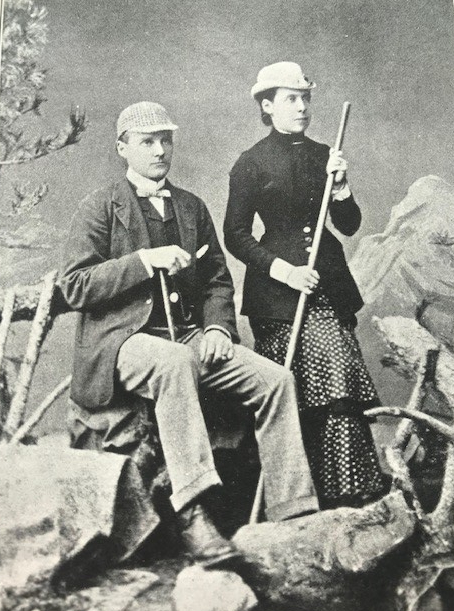
man and woman with sticks
Maunsell and his wife on their honeymoon

Sir Alec Black

Born on 23 December 1872, Alec Black was another of Grimsby’s great philanthropists.

Alick Black was born in Grimsby, his mother was Charlotte nee Fox, the youngest daughter of John Charles Fox. As a child he lived at 69 Cleethorpe Road which on the 1881 census shows his mother working as a confectioner. He had an older sister Kate.

His father William was an engineer and died from drowning on 28 November 1876 in Dieppe, France. He was working on the steamer Ernestine. At the time of his marriage, William was the Chief Engineer of SS Lord Cardigan. He was born in Scotland.

In 1891 the family are living at 23 Tasburgh Street, Grimsby and Alec is listed as a Fisher Merchants Clerk. His mother remarried and in 1901 the family have moved to 240 Hainton Street, where Alec is now showing as a steamship owner.

He also changed his name by deed poll from Alick (Scottish variation) to Alec.

Career

Alec was connected to the town’s fishing industry and had a fleet of trawlers as well as owning a fish curing factory, which in the 1st WW was turned into a shell factory.

In 1916 he is manager of the Pioneer Steam Fishing Company; in the 1930s he is general manager of the Earl Steam Fishing Company.

Marriage and scandal

In June 1902, Alec married Florence Mary Smith. They had no children. They lived at Huevia, Bargate and then at The Lodge.

Florence was the daughter of David and Isabel Smith. Her father was a draper and she lived in Cartergate.

By 1911 they had separated and Alec is living in The Lodge, Bargate (one of the places I talk about on my Abbey Road guided tour). His wife is shown as Rebecca M Black and then it’s crossed out.

In 1926 divorce was granted on grounds of his adultery. In court Lady Florence Black said her husband committed adultery with an unknown woman at the Hotel Great Central, Marylebone, London on Sept 24 1925.

In 1939 he is living at Field House, Pelham Rd, Grimsby.

Knighthood

In 1918 he was knighted and given the Black baronetcy after providing the government with boats in 1914 for minesweeping duties and loans he gave for the war effort. He became Sir Alec Black 1st Baronet. This title died with him as he had no issue.

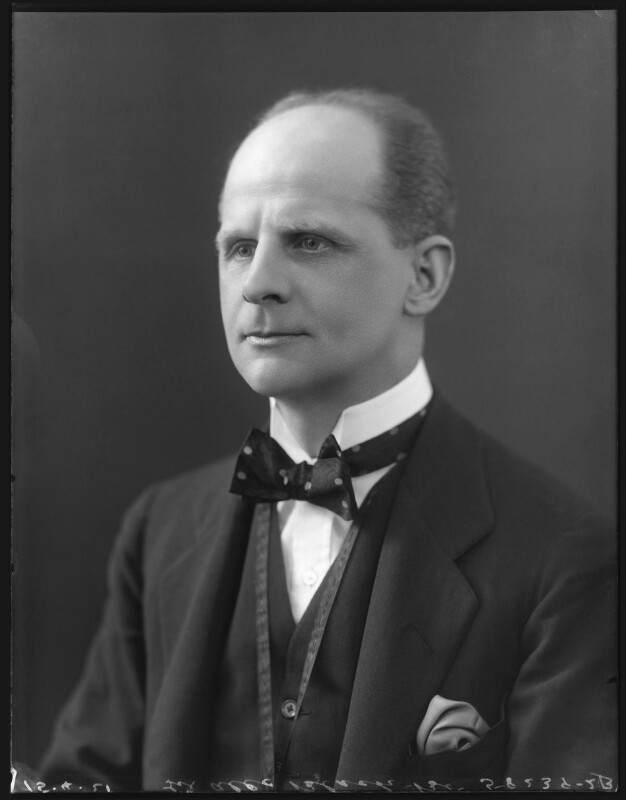
Man in a suit with bow tie
Sir Alec Black

Love for horse racing

Alec loved his horse racing. In 1917 he bought a racehorse called The Panther for 3,600 guineas. On 7 May 1919 the horse won the 2,000 guineas at Newmarket. It went on to be placed 10th in the Derby. Alec had many broodmares at his Newmarket Stud.

Basil Jarvis was his trainer and worked from the Primrose Cottage stables in Newmarket.

In 1931 he sold his bloodstock.

By 1933 he was heading the breeders list thanks to his horses Columbo, who won the 2000 Guineas in 1934, and Brown Betty, who won the 1000 Guineas in 1933. The horse Singapore who won the St Leger in 1930 was bred from Black’s brood mare Tetrabbazia.

Death and legacy

Sir Alec died on 28 June 1942 aged 69.

He left £278,893 in his will. £50,000 was left to his racing manager. A charity for fishermen and dock workers was set up and a charity to fund the hospital bedlinen. He is buried in Scartho Road cemetery.

Sir Alec Black’s Charity still operates today.

He also gave land to the town to build housing – land around Chelmsford Road.

Sir George Doughty

One of the great philanthropists in Grimsby was George Doughty. From humble beginnings to becoming a knight, the town was at the heart of everything he did.

Who was he?

In his life he worked as merchant, ship owner and was a partner in Hagerup, Doughty and Co. He was also a carpenter and had a workshop in Maude Street where he lived with his wife and children.

George was born on 13 March 1854. He was the son of William and xx. He grew up at 8 Robinson Street and was educated at the Wesleyan Day School in George Street. In May 1862 he moved from the infants to the upper school.

Career

He left school aged 13 and went to work for Mark Shepherd, who had a furniture shop with a workshop at the rear. This stood on the corner of Wellington Street and Freeman Street – now known as the Wellington Arms.

After a short time he became apprentice to Johnny Brown, a builder based in Victoria Street. It was during this time he joined a debating society in the Baptist schoolroom in Burgess Street.

After his apprenticeship, he joined up with George Woodhead and formed Woodhead & Doughty. They had premises near the footbridge in Central Market, which in 1912 was owned by Beels and Axe.

Running his own business he did the woodwork in Flottergate Methodist Chapel and built properties in Princes Avenue and Dudley Street, including Gordon House where he lived for a time.

In 1888 along with Thomas Baskcomb, he formed the North Eastern Steam Trawling Company.

On 4 April 1890 he met Frederick Hagerup, ex-Russian Consul and they formed Hagerup & Doughty.

In 1891 the International Steam Trawling Company was formed with George as chairman and Thomas Baskcomb as a director. By 1898 they had 38 trawlers, a twine factory in Ropery St, and a ship building yard on Bumble Creek.

In that same year George was also elected chairman of the Grimsby Times & Telegraph Co., a newspaper business which Hagerup & Doughty purchased. At the time the company produced three papers: the nightly Grimsby Telegraph; Grimsby Times on a Friday and Grimsby Saturday Telegraph. The latter was the official paper of the Unionists and his son Wilfred would become the editor.

By 1905 Hagerup & Doughty, The Ice Factory and the Monarch Steam Trawling Co amalgamated to form the Consolidated Steam Fishing Company. It had 94 trawlers.

Methodism

George considered joining the primitive ministry but his father could not afford the fees.

Methodism was central to his life and he did later become a lay Methodist preacher and had strong views on drinking.

In May 1883 he was one of the travelling preachers delegates who attended a conference in London. He attended the temperance meetings as a reader.

Politics

He became interested in politics and became a town aldermen. He was also Mayor of Grimsby in 1892 and xx .

His love for politics began in 1879 when he was elected as a member of the Liberal Registration Association in Barton.

On 1 November 1884 he was elected on to Grimsby Town Council. By 1885 he was chairman of a Demonstration Committee set up to oppose the closure of the town’s Peoples Park by the council. He was called as a witness when one of the committee was charged with obstruction.

At the time the council charged an entry fee into the park and the committee was set up to protest that as the council owned the park and they were ratepayers, they had the freedom to enter the park without payment.

In 1891 he was elected as alderman for the County Borough of Grimsby.

In 1895 stood in the general election was elected as member of parliament for Grimsby for the Liberal Party.

In 1898 he resigned his seat after disagreeing with Gladstone s Home Rule and joined the Liberal Unionists, and was re-elected in the by-election with an increased majority. He was defeated in the January 1910 election, but won his seat back later in the year.

Two years later he joined the Conservative Party when the Liberal Unionists merged. He remained the town’s MP until his death, when he was succeeded by the jam manufacturer, Thomas Tickler.

Knighthood

In June 1904 he was knighted for his services to xx in the King’s Birthday Honours. On the same list was one Doctor Edward Elgar.

Marriage

His first wife, Rebecca Vere, was the niece of John Vere, who owned the firm Smith, Stephenson and Vere engineers, and the daughter of Thomas Warrs Vere, an engineer.

Rebecca worked as a grocery assistant in a store run by Henry Smethurst Senior. This shop was on Victoria Street near to Lock Hill.

They married on 10 April 1879 at the Victoria St Primitive Methodist Chapel. Rev Robert Harrison presided and the marriage was witnessed by Henry Smethurst Senior and Annie Doughty, George’s sister.

The couple lived in Maude Street where he used the rear workshops for his business. His two children, Wilfred Vere and Annie Vere were born here. Annie would go on to marry Roland Charlton, his father was a ship builder.

In 1892 the family moved to Wood Furze – a house he had build for himself. It stands on the corner of Abbey Road and Wellowgate. You can learn more about this house on my Abbey Road tour.

His wife Rebecca died on their daughter’s 21st birthday on 14 January 1904.

He met his second wife, Eugenia Stone OBE while on a cruise to India in 1907. She was an Australian journalist. They were married on 15 August 1907 at St James Church, London. He was 53 and she was 28.

They received wedding gifts from the parliamentary party and the corporation which included a coat of arms.

In Grimsby in honour of the marriage, bunting was displayed in front of all the buildings, public and commercial. Numerous flags were also flown.

Death

Sir George died on 27 April 1914 at his home in Waltham – the Hall. He was given a state funeral in the town.

He left £47,000 in his will and is buried with Rebecca in Waltham parish church – which was opposite the Old Hall.

His wife Eugenia continued to live in the Hall until it was put for sale in 1917. She spent her life in Grimsby until that point working on fundraising for the Unionists, women’s suffrage and entertaining the children of St Anthony’s Orphanage in the annual picnics at the home. She then moved to Surrey.

Waltham Hall

At the time of the sale, the brochure depicted some of the wonderful items for sale.

Including a full sized billiard table, carpets by Axminster, Dresden figurines, a Wolseley car, Chippendale furniture, and numerous items of silver.

Footnote – Scandal

In 1923 Lady Eugenia Doughty was cited in divorce proceedings of Arthur Tickler and his wife. His wife brought the petition on the grounds of Arthur’s cruelty and his misconduct with Lady Doughty. She had found a series of letters between the two showing they had had an affair. Mrs Tickler had confronted Lady Doughty and begged her to leave her husband alone.

Mr Tickler had found out and burst into his wife’s bedroom wielding a revolver and threatened to shoot her.

Divorce was granted on the grounds of the love letters between the two. The lovers never married.

Lady Doughty died at her Esher home in 1934. She was described as a charming woman, who made many friends.

A staunch Conservative, she founded the local women’s organisation – the Grimsby Unionist Women’s League in 1910. During the First World War she undertook many fundraising activities for the prisoners of war in Ruhleben Camp – many of them fishermen.

Her funeral took place at St Mary’s RC Church in Grimsby and she in buried at Scartho Road Cemetery in a family plot with her niece, Cherry Stone

Why you should look up

History is all around us. When I lead my walks, especially around the towns, I tell people to look up and notice the world above.

Above the modern shop fronts notice the old building and see the decorative chimney pots and ornate trappings including the ornate details around on cornices and balustrades. Detailed friezes running around window frames, moldings, beautiful porticos and pilasters.

The arrival of the railway not only opened up land for development, but also meant that items could be brought from further afield – slate began to replace tiles. New methods of construction saw plate glass, polished granite and iron framed construction appear.

Historic buildings

Though many towns lost their historic buildings during the clearances of the 60s, some managed to survive. In Grimsby a few of the Victorian buildings on the main street survived – the more ornate being the former banks and insurance company offices.

The elaborate town hall constructed in the Italian Renaissance style befits a town going places and symbolises its wealth, shouting ‘we’ve made it’ to the world. Its grandiose existence is a nod to the money coming into the town as the docks grew and the town grew. It was statement to outsiders.

Now with so much of our heritage lost, we need to embrace what we have. When our old buildings are reused and repurposed it’s a good move. Sadly many are not looked after by the private landlords who own them – broken windows, rotten wood, slipped tiles are all evident when you look up.

Our buildings are the character of the high street and add so much to its soul, we need these landlords to look after and care for them. Councils do have the power to force local landlords to carry out repairs, or sell neglected buildings to help revitalise the high street.

Hollowing out

In Cornwall the council considered using compulsory purchase orders to stop the rot, targeting significant buildings. Birmingham City Council is another which has used these powers and so could North East Lincolnshire Council.

A revised approach to planning could also be considered – change of use of some buildings to provide more housing on the high street to bring people back into the town centre and therefore throwing a lifeline to a mixed use of services and retail and stop the hollowing out of the town.

Why come on a tour?

Grimsby and its fellow towns and villages have a rich and interesting history. From those early settlers who came upon a marsh landscape to the builders of the port, there are stories to tell.

Guided tours

The guided tours have been running for many years and were borne out of my love for history and wanting to share those stories with people.

They started when I began leading walks as part of the Lincolnshire Wolds Walking Festival and walks in northern Lincolnshire were needed.

I developed them from subjects that I had covered when I worked in local television. From there the idea for the book Grimsby Streets was developed, and from there came the walks I lead around the town.

Walks for everyone

It’s not just visitors who come on my walks, but many locals come to share their memories, or learn more about the area.

I love hearing their stories. They bring the place alive and add meaning to buildings, either derelict or missing from the landscape. They evoke so much in people and those memories get woven into the fabric of the tour. So each time the tour can be different.

If you want to learn more about the buildings, the people and the history behind the streets names; if you love history and want to keep memories alive, then these walks are for you.

Book through the website or through the Eventbrite page.

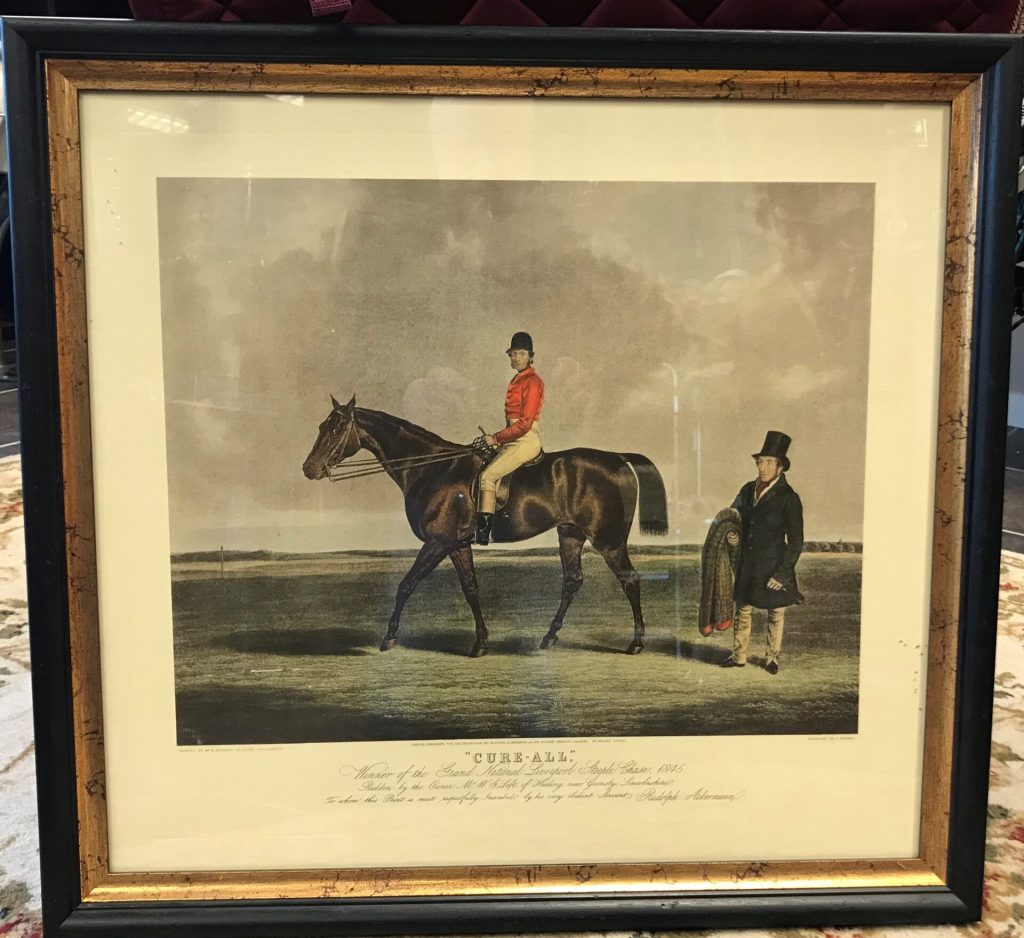
Cure All

Cure All painted by Mr B Hubbard, Louth, Lincolnshire

In 1845 a horse bought for £50 from a sale won the Grand National against the odds.

That horse was Cure All, owned and rode by William Loft. William was a gentleman farmer from Healing. He lived at The Rookery , which still stands in the Lincolnshire village today, though it is no longer a farm. Its land is now covered by new builds and its once barns and outbuildings have been converted to housing.

Horncastle Horse Fair

Horse fairs were common around the country. People would travel from far to a good sale. Horncastle was one such popular fair that attracted people from around the country. The town was granted its charter in 1299, and by 1306 had become the leading fair for equines in England.

Buyers were prepared to pay between £150 and £600 for a decent horse. In 1839 the Grand National winner Lottery had been purchased from here.

Cure All, a brown horse, found himself for sale at the Fair in 1843. He was being sold for £240. He was tried by one prospective buyer who rode him out and returned him lame. William came along and offered £50 for him.

Life at Healing

The horse came to its new home at The Rookery, where it was used by William as a farm horse. Used as a farm hack, William also took him hunting.

He was well known in the social circles for his love of hunting and steeplechasing. The horse proved himself in the hunting field and showed what a stunning jumper he was.

He came to the attention of William Sterling-Crawford, a racehorse owner. He’d placed his horse into the Grand National but when it was forced to withdraw, Loft agreed to lease Cure All on the proviso that he could ride him.

Grand National 1845

The railway had not reached Liverpool, so the horse and the entourage made their way to Aintree by road and rail when possible.

They arrived in the evening one day before the race. They were both in such a state that bookmakers offered any price as no one believed he would do well.

The ground was hard having rained the day before followed by a hard frost. Sterling-Crawford complained about the going, saying it was too unsafe. All other owners voted in favour of the race being run.

It worked in Cure All’s favour, as many horses quickly tired leaving him to outrun them and come home in record time of 10 minutes 47 seconds. They won 590 sovereigns. The race was held on 5 March.

Only four horses are officially recorded as having completed the race. The favourite Vangaurd ridden by Tom Oliver was pulled up.

When the horse returned to Healing with Loft and groom Christopher ‘Kitty’ Crisp, the bells pealed out to celebrate their victory.

Painting

A watercolour was painted of Cure All ridden by Loft with Crisp standing at the side.

The original is still owned by the Loft family but was loaned to Mark Brennan, who owns Healing Manor Hotel to hang in a room at the hotel called the Cure All Lounge.

I have a copy of the painting which was bought at an antiques centre in Horncastle.