Grimsby steeped in Scandinavian history. Our language is filled with words that our Danish forebears would recognise.
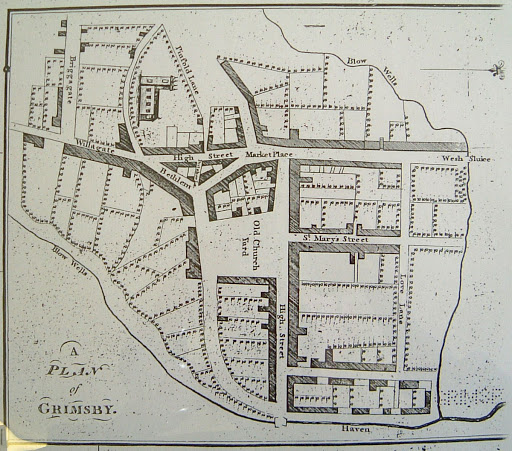
Take the suffix -gate on streets DeansGATE, WellowGATE, BrighowGATE, CarterGATE and the lost streets of FlotterGATE, and BaxterGATE. The suffix -Gate comes from the Scandinavian GATA and can also be traced to Anglo Saxon GEATA.
It means a cut through, a street. Aside from the church (Grimsby Minster), those names are ancient and still follow the original routes. You are treading in the footsteps of the ancestors.
Gate can be seen in many settlements under Danelaw – York, Hull and Lincoln all have streets with the gate suffix.
Buildings may have come and gone, but those streets remain the same, albeit with a few minor changes. You can learn much from those street patterns and the names.
Deansgate, on earlier maps is spelt Denesgate, the street of the Danes, or is it a play on words being close to the church and a Dean being a member of the clergy.
Three lost areas of the town are Ryngstake Thing, Kageler Thing and Mustlow Thing. A thing was an old Norse word for a meeting – particularly a place of government at a local level.
Next time you walk through town, imagine who has walked those streets before you. You can learn more about the town’s streets on my next guided walk on 14 April 2024.
You can learn more about streets in my book Grimsby Streets or on this website Great Grimsby :: Survey of English Place-Names (nottingham.ac.uk)
 Guided Tours around North East Lincolnshire